I Wrote Ultralearning. This is What I’d Change Because of AI
My book Ultralearning was published in 2019. It documents the process of intensive self-education that inspired some of my self-guided projects learning languages, computer science, art and more.我的书超级学习于2019年出版。书中记录了高强度自学的过程,这也启发了我开展一些自主学习项目,学习语言、计算机科学、艺术等内容。
The book went on to become a surprise bestseller, with over 200,000 copies sold and dozens of translated editions. To this day, the bulk of new reader emails I get are from people who discovered me through Ultralearning.这本书后来成了一匹黑马畅销书,销量超过20万册,还推出了数十种译本。直到今天,我收到的新读者邮件里,大部分都是通过_超级学习法_认识我的人。
A question I get asked a lot is how the book would change if it were published today. In 2019, the conversation about AI was still a whisper. Now, it’s deafening.我经常被问到一个问题:如果这本书在今天出版,会有哪些变化。2019年,关于人工智能的讨论还只是轻声细语,如今却已是震耳欲聋。
Today, I’d like to walk through Ultralearning and look at what’s changed, what hasn’t, and what I think the future holds for learning and education.今天,我想带大家了解_超级学习_,看看有哪些变化、哪些保持不变,以及我认为学习和教育的未来会是怎样。
What Hasn’t Changed 未曾改变的部分
The basic message of Ultralearning, I believe, still holds up pretty well:我认为,《超级学习》的核心观点依然站得住脚:
Technology is widening the gulf between the haves and have-nots of human capital. Learning in school is insufficient. To achieve, we need to continually add to our skills and knowledge, and doing so efficiently is imperative given our information-saturated environment.科技正在扩大人力资本层面上贫富群体之间的差距。学校教育已无法满足需求。要实现目标,我们需要不断提升自身的技能与知识,而在如今信息泛滥的环境下,高效地做到这一点至关重要。
AI has only accelerated those trends.人工智能只会加速这些趋势。
While some early reports suggested AI might be an equalizer, helping mediocre programmers and writers produce at a higher level, I think those early takes now seem naive. If anything, the fruitful branches of the skill tree for becoming a professional programmer have only gotten higher—with tasks that were previously for junior devs now wholly within the grasp of automated agents.虽然一些早期报道认为人工智能可能会成为平衡器,帮助普通的程序员和创作者达到更高的创作水平,但我认为如今这些早期的看法显得过于天真。恰恰相反,成为专业程序员这条技能树的高枝只会愈发难以触及——过去初级开发者才能完成的任务,如今已完全处于智能体的能力范围之内。
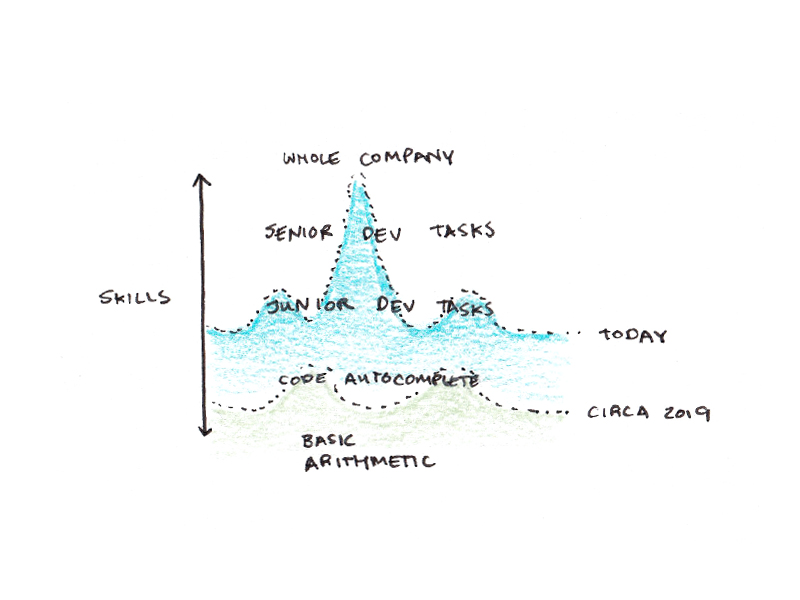
Some prognosticators suggest that the culmination of this process will be the devaluing of all human skills. Why bother learning anything at all if AI will soon do it better than you?一些预言家认为,这一过程的最终结果将是人类所有技能的贬值。如果人工智能很快就能比你做得更好,那还有什么必要去学习_任何东西_呢?
I’m skeptical of this as a final outcome. I tend to think there will continue to be humans doing human jobs far into the future, if only because certain kinds of work are inherently humanistic. But the medium-term outcome seems to clearly back the urgent need for humans to learn deeper and more robust skills to compete.我对这一最终结果持怀疑态度。我倾向于认为,在未来很长一段时间里,仍会有人类从事人类的工作,仅仅是因为某些类型的工作具有固有的人本属性。但中期结果似乎明确表明,人类迫切需要学习更深层次、更扎实的技能以提升竞争力。
AI has not fundamentally changed the effort involved in learning. Ultralearning was written from a particular vantage point: a person eager to learn and willing to do the hard work required. These people have always been a minority, and AI cannot change the intrinsic effort required.人工智能并未从根本上改变学习所需付出的努力。《超级学习》是从一个特定的视角撰写而成的:即一个渴望学习、并愿意付出所需艰辛努力的人。这类人一直都是少数群体,而人工智能也无法改变学习本身所需付出的固有努力。
So, as a proportion of the population, I don’t expect an explosion in impressive autodidacts any more than we saw with the arrival of the Internet. The world’s knowledge is already at our fingertips, but most people will still prefer to watch funny videos instead. AI certainly isn’t changing that.所以,从人口比例来看,我不认为杰出的自学成才者会像互联网到来时那样激增。世界的知识早已触手可及,但大多数人还是会更愿意看搞笑视频。人工智能当然不会改变这一点。
But, at a tactical level, AI has created new possibilities (and pitfalls) that didn’t exist when I wrote Ultralearning. So let’s look at some of those, following the nine principles of the book.但从战术层面来看,人工智能创造了新的可能性(也带来了新的陷阱),这是我撰写《超级学习》时所没有的。那么,我们就结合书中的九大原则,来探讨其中的一些情况。
Principle #1: Meta-learning 原则一:元学习
This is probably the chapter most in need of a rewrite. Self-education has always stumbled on the bootstrapping-problem of knowledge: how do you organize an effective learning project when you lack the knowledge to organize it?这大概是最需要重写的一章。自学一直卡在知识的自举问题上:当你缺乏组织学习项目所需的知识时,该如何构建一个高效的学习项目呢?
My solution in the book was to encourage people to do research: figure out how a skill works, talk to experts and map out what you need to learn before you start.我在书中给出的解决办法是鼓励人们去做研究:弄清楚一项技能的运作原理,与专家交流,并在开始学习前规划好需要掌握的内容。
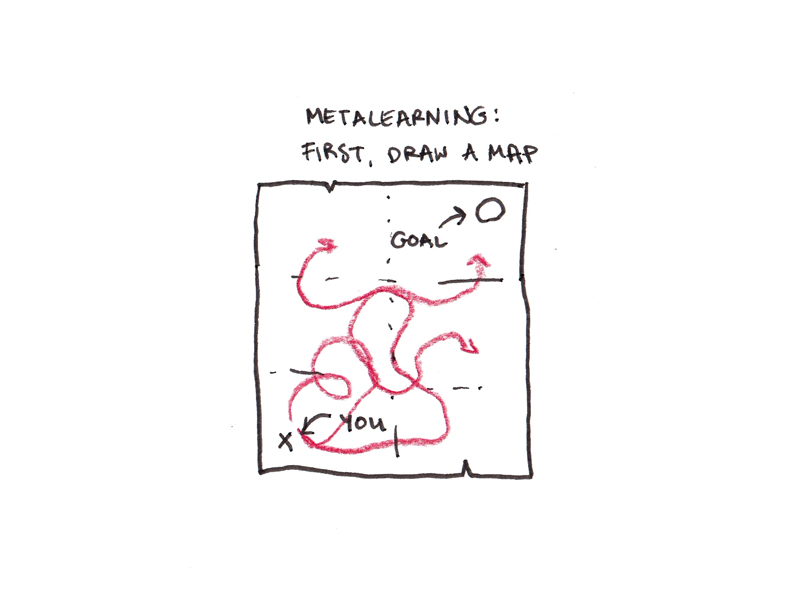
AI has dramatically reduced the cost of doing this kind of research, and not only for academic subjects. Even obscure practical skills can now be broken down into discrete subtopics, practice activities, lists of facts, concepts and more. 人工智能大幅降低了开展这类研究的成本,而且这一改变不仅适用于学术领域。即便是冷门的实用技能,如今也能被拆解为一个个独立的子主题、练习活动、知识点清单以及各类概念等内容。
My go-to approach to tackling a new topic area these days is to fire up ChatGPT and get it to start with a Deep Research on the topic, beginning with some of my major questions. The resulting document isn’t usually on par with genuine experts, but I very quickly narrow in on what sorts of directions I need to take to fill in my research.如今我处理一个新主题的首选方法是打开ChatGPT,让它先围绕这个主题展开深度研究,从我的一些核心问题入手。生成的文档通常比不上真正的专家,但我能很快明确需要从哪些方向入手来完善自己的研究。
Similarly, if you’re learning a less academic skill set, using AI can surface the current best practices and give you the basic building blocks for a learning project.同样地,如果你在学习一套非学术性的技能,借助人工智能可以了解当下的最佳实践,并为你的学习项目打下基础。
I very rarely stay totally within AI responses for meta-learning. It’s always good to get to the ground truth of some genuine expert or teacher’s curriculum. Finding those teachers and experts and the organizing paradigms that lead to them is much easier now with AI.在元学习方面,我很少完全依赖人工智能的回复。去了解一些真正的专家或导师的课程的实际内容总是很有好处的。如今有了人工智能,找到这些导师和专家,以及造就他们的教学体系要容易得多。
Principle #2: Focus 原则二:专注
AI hasn’t changed this principle. Learning anything requires time. Even when you do projects efficiently, they’re still an enormous amount of work. If you can’t put the time in, you can’t get the results.人工智能并没有改变这一原则。学习任何东西都需要时间。即便你高效地做项目,这些项目依然是海量的工作。如果你不能投入时间,就无法取得成果。
Learning also requires attention. If you can’t devote large chunks of undistracted time to a project, you’ll fail to build deep skills and understanding.学习也需要专注。如果你无法投入大量不受干扰的时间去做一个项目,就无法培养深厚的技能和形成深刻的理解。
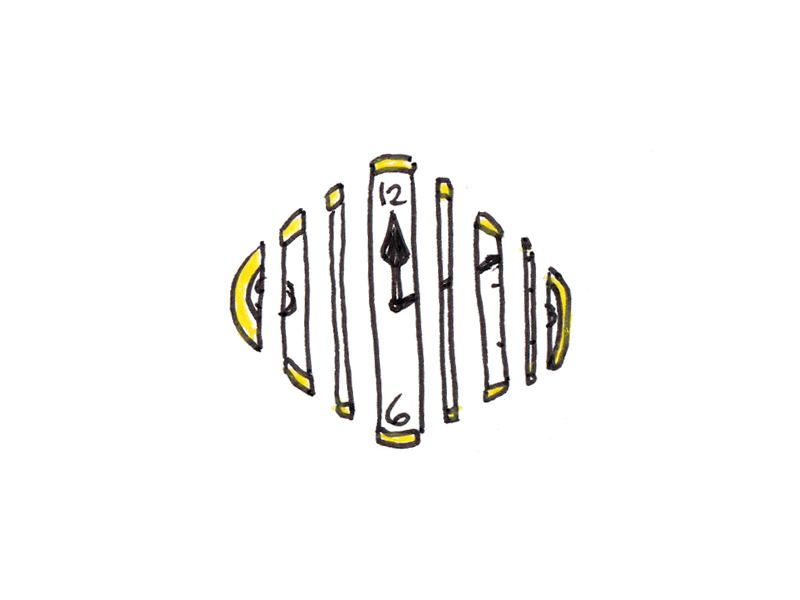
The attentional ecosystem has only gotten worse since Ultralearning was published. When I was doing projects in my early twenties, the major distractions were Reddit threads and the occasional Facebook post. Now, an endless treadmill of short-form video content on our phones means we can play the attentional slot machine all day without pause.自_超级学习_出版以来,注意力生态系统的状况变得更糟了。我二十出头做项目时,主要的干扰来自Reddit帖子和偶尔的Facebook动态。如今,手机上没完没了的短视频内容就像一台不停运转的跑步机,让我们能一整天不间断地玩注意力老虎机。
Currently, I see AI-generated content as less appealing than human-generated content, so I don’t see it making the problem of addictive social media much worse. Perhaps in a few years AI-generated feeds will be more enticing than human-created content, and I’ll need to revise this point.目前,我认为人工智能生成的内容不如人类生成的内容有吸引力,所以我不认为它会让社交媒体成瘾的问题变得更严重。也许几年后,人工智能生成的信息流会比人类创作的内容更诱人,到那时我就需要修正这一观点了。
Principle #3: Directness 原则三:直接性
Practice the skill you want to get good at. Do the real thing and avoid substitutes.练习你想要精通的技能。去做真正的事,避免用替代品。
AI probably makes this harder. Because AI is so compelling, there’s a temptation to do AI-mediated practice rather than engaging in the hard, scary, and sometimes uncomfortable, real-world skill that directness suggests.人工智能可能会让这件事变得更难。因为人工智能极具吸引力,人们往往会倾向于进行人工智能辅助的练习,而不是去直面直接沟通所要求的那种艰难、令人紧张,有时甚至让人不适的真实世界技能。
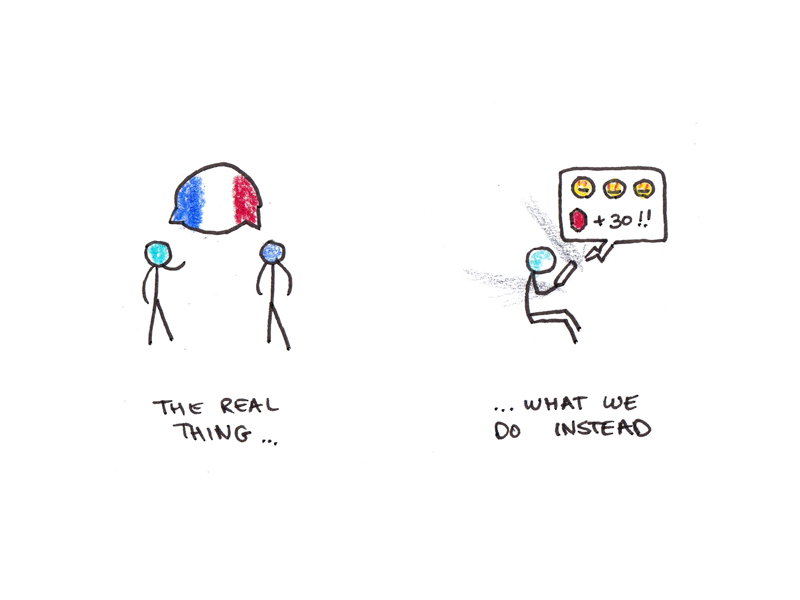
Take language learning, for instance. In Ultralearning, I was highly skeptical of the gamified drills offered by apps like Duolingo. To me, they simply omit so much of the actual skill of conversing in another language that you could play these games for years and still feel uncomfortable ordering food at a restaurant.以语言学习为例。在《超级学习》一书中,我对多邻国等应用提供的游戏化练习持高度怀疑态度。在我看来,这些练习完全忽略了外语交流这一核心技能的大部分内容,你可能玩这些游戏好几年,在餐厅点餐时仍然会感到局促不安。
Since then, I’ve heard people claim that they’re using AI to learn languages, writing—and even social skills(!!).从那以后,我就听到有人说他们在用人工智能学习语言、写作,甚至社交技能(!!)。
Of course, one could easily imagine someone who is having real conversations, publishing essays and attending social events simply using AI to shore up some weak points. But, more often, I worry that people are using the verisimilitude that AI creates to try to avoid doing the real thing entirely.当然,我们很容易想象这样一种人:他们进行真实的对话、发表文章、出席社交活动,只是借助人工智能来弥补自身的一些短板。但更多时候,我担心人们会利用人工智能营造的逼真效果,试图彻底逃避去做真正的事情。
Principle #4: Drill 原则四:反复练习
The counterpart to directness is drill: breaking down a complex skill into smaller parts, focusing on those smaller parts either in isolation or with greater focus to make selective improvement. These drills can include conjugation exercises for Spanish, practicing layups for basketball, making value studies for painting, and more.与直接性相对的是专项训练:将一项复杂技能拆解为更小的组成部分,要么单独练习这些小部分,要么更专注地进行练习,以实现有针对性的提升。这些专项训练可以包括西班牙语的变位练习、篮球的上篮练习、绘画的价值研究练习等等。
Here AI presents a whole range of new opportunities through AI-generated practice problems, flashcards, worksheets or feedback.人工智能通过生成练习题、抽认卡、学习单或反馈,带来了全新的机遇。
For instance, one of the major difficulties in my language learning projects had been how much weight to put on vocabulary study through flashcards. On the one hand, an efficient spaced-repetition system, backed by some careful mnemonics, can make it much faster to acquire a few thousand words of basic vocabulary. On the other hand, flashcards can lead to brittle knowledge that is difficult to generalize to real conversations.例如,我的语言学习项目中一个主要难题是,该在抽认卡词汇学习上投入多少精力。一方面,一套高效的间隔重复系统配合一些精心设计的记忆技巧,能让学习者更快掌握数千个基础词汇。但另一方面,仅靠抽认卡学到的知识往往不够扎实,难以迁移到真实的对话场景中。
A major cause of my ambivalence with flashcards is that the paradigm assumes each word is an atomic fact. But what we are actually learning when we learn new words is not merely a definition or translation. Instead, we’re also learning contextual associations for how that word typically appears in spoken or written language. It’s how we know the difference between the words small and petite, or big and grand. These associations have to be learned implicitly, and can’t simply be memorized as part of the definition.我对抽认卡感到矛盾的一个主要原因是,这种模式将每个单词都视为一个独立的事实。但我们学习新单词时,**真正在掌握的**并非仅仅是释义或翻译。相反,我们还在学习该单词在口语或书面语中常见出现的语境关联。这就是我们能区分small和_petite_、_big_和_grand_这些词差异的原因。这些关联需要通过潜移默化的方式习得,无法单纯作为释义的一部分死记硬背。
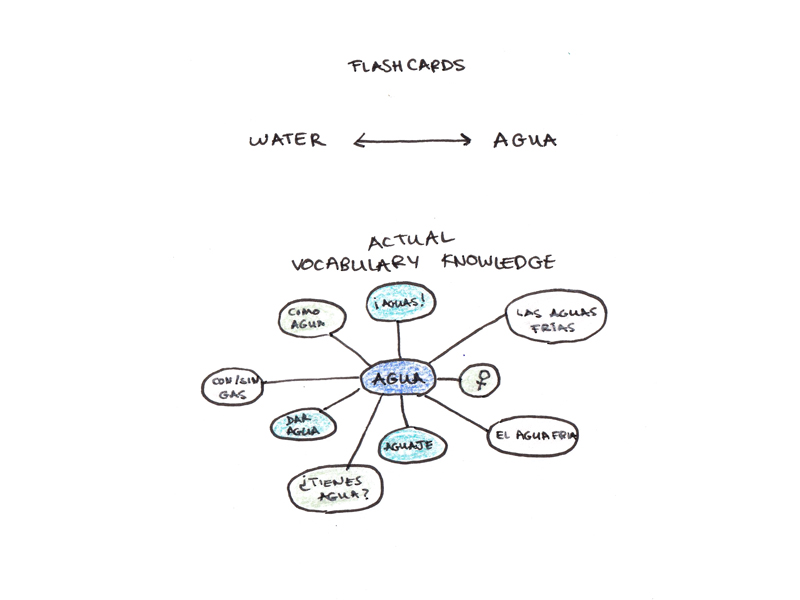
Now, with AI, we can generate flashcards that always place the to-be-learned word in a novel sentence, giving us the needed repetition alongside the variation required for learning contextual cues. This, to me, is a major upgrade over the flashcard paradigm.如今,借助人工智能,我们可以制作出能将待学单词置于全新句子中的抽认卡,既提供了必要的重复练习,又融入了学习语境线索所需的变化形式。在我看来,这是对抽认卡模式的一次重大升级。
Conjugations are another area that is difficult to learn without premade practice questions. The issue is that what needs to be learned isn’t a fixed association (e.g., agua -> water) or a verbalized rule (e.g., “change -ar to -o for first-person present tense”) but rather a procedural mapping that needs to take a variable input and give a variable output.变位是另一个没有现成练习题就很难学好的领域。问题在于,需要掌握的并非固定关联(例如,agua -> 水),也不是明确的规则(例如,“现在时第一人称将 -ar 变为 -o”),而是一种需要接收可变输入、输出可变结果的过程性映射。
To learn procedures like this effectively, we need flashcards that vary the input/output relationship to show all permutations of the pattern. The problem is that this used to be hard to do before AI. Now, of course, we can use AI to generate infinite variations of the same basic practice problems, which solves the material gap that exists for a lot of skills.要高效学习这类方法,我们需要能改变输入输出关系、展示该模式所有排列组合的抽认卡。问题在于,在人工智能出现之前,做到这一点一直很困难。当然,现在我们可以借助人工智能生成同一类基础练习题的无限种变体,这就解决了许多技能学习中存在的素材缺口问题。
Principle #5: Retrieval 原则五:提取
Memory is strengthened more by recall than by review. If you want to learn something by heart, you need to practice remembering it, not just looking at it.回忆比复习更能强化记忆。如果你想把某样东西熟记于心,就需要练习去回忆它,而不只是反复查看。
I’ve seen a lot of claims that AI can be helpful with this aspect of learning. For instance, AI tools can generate quizzes based on the books you’re reading allowing you to deepen your knowledge of the content.我见过不少说法称人工智能能在学习的这一方面提供帮助。例如,人工智能工具可以根据你正在阅读的书籍生成测试题,让你加深对内容的理解。
I tend to be a bit skeptical about the utility here. Not because quizzes or practice questions are bad (they certainly aren’t), but a lot of the value in retrieval comes from selecting what knowledge you ought to retrieve.我对这个工具的实用性有点怀疑。不是因为测验或练习题不好(它们当然不差),而是检索的核心价值在于选择你应该检索哪些知识。
For instance, a naive way to do retrieval practice is simply to quiz yourself on every factual claim made in a text or book. But rarely is the main goal of learning a complete verbatim memory of every factual claim in a book. Instead, we typically want to be able to restate the main ideas and understand the key points and concepts.例如,进行提取练习的一种简单方法就是针对文本或书籍中的每一个事实陈述进行自我测试。但学习的主要目标很少是逐字逐句地记住书中的每一个事实陈述。相反,我们通常希望能够重述核心思想,并理解关键要点和概念。
Sometimes we may have more idiosyncratic goals, like remembering the authors of key studies for future research or knowing the dates to put historical events inside a chronological context. But memorizing every single fact in a text is almost never a good use of limited studying time.有时我们可能会有更个性化的目标,比如为未来的研究记住关键研究的作者,或是了解历史事件的日期以将其置于时间线背景中。但在有限的学习时间里,死记硬背文本中的每一个细节几乎绝不是高效的做法。
This is not an idle concern. The world of knowledge is infinite. The effort needed to memorize every fact from one text is effort that cannot be spent on other texts. I’d much rather remember the gist of ten books—their big, important ideas—than know every bit of trivia contained in just one of them.这并非杞人忧天。知识的世界是无限的。记住一篇文本中的所有细节所付出的精力,无法再用于其他文本。我更愿意记住十本书的主旨——它们宏大且重要的思想——而非只吃透其中一本书里的所有细枝末节。
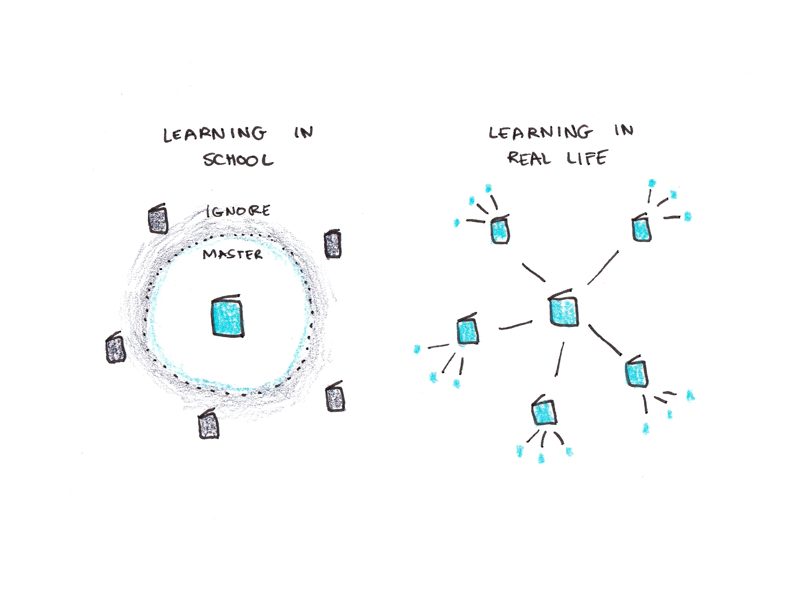
Practice problems and quizzes designed by a teacher avoid this problem because the teacher has in mind clear educational goals. When they ask a question on a test, it is because they think it is important to know that fact or idea. But if we give an AI a random text without this pedagogical context, the chance that it’s going to narrow in on what is important is much lower—not because of insufficiently capable AI, but because it doesn’t have a useful goal. If you asked a human to generate a quiz from a random text absent any pedagogical goals, they’d also make a bad quiz.教师设计的练习题和小测验可以避免这一问题,因为教师心中有明确的教学目标。他们在考试中提出某个问题,是因为他们认为让学生掌握这一事实或观点至关重要。但如果我们给人工智能一段缺乏这种教学背景的随机文本,它精准抓住重点的可能性就会低得多——这并非因为人工智能能力不足,而是因为它没有明确的有用目标。如果让一个人在没有任何教学目标的情况下,从一段随机文本中生成一份小测验,他们也会出一份糟糕的小测验。
Retrieval, of course, doesn’t need quizzes to work. Free recall, the paradigm where you simply try to remember as much as you can from a source, works remarkably well and definitely doesn’t require AI. So does writing essays about topics you’re learning, which may soon become a lost art. These are low-tech tools that work amazingly well for retrieving knowledge.当然,知识提取并不需要借助测试题来实现。自由回忆法——即你只需尝试从某一来源中尽可能多地回忆内容——效果十分显著,而且完全不需要借助人工智能。针对你正在学习的主题撰写文章也是如此,这种方式或许很快就会成为一门失传的技艺。这些低技术含量的工具,在提取知识方面都有着惊人的效果。
Principle #6: Feedback 原则六:反馈
Feedback is essential for learning. But we often get sparse or incomplete feedback in our learning efforts, which slows down progress.反馈对于学习至关重要。但在学习过程中,我们常常只能得到零散或不完整的反馈,这会拖慢学习进度。
In symbolic domains, where the skill is primarily mediated through tokens and text, I think currently-existing AI can do a ton to enhance feedback. If I’m trying to improve as a writer, I can get AI to critique my use of research, word choice and storytelling. If I’m trying to improve as a programmer, I can be shown more efficient design patterns or algorithms for solving the same task.在以符号和文本为主要媒介传递技能的符号领域中,我认为现有的人工智能已经能在优化反馈方面发挥巨大作用。如果我想提升写作能力,人工智能可以帮我点评我在研究引用、词汇运用和叙事手法上的表现;如果我想精进编程技能,它也能为我展示解决同一任务时更高效的设计模式或算法。
A while back, I recorded some promotional videos in Mandarin for a translation of my book. I wrote the script myself, but then I asked AI to offer suggestions, and it fixed some places where I wasn’t speaking very idiomatically. Before AI, I would have had to pay someone for that advice.前段时间,我为自己一本书的译本拍了几段普通话宣传视频。脚本是我自己写的,不过后来我请人工智能提了些建议,它还帮我改了几处我表达得不够地道的地方。要是没有人工智能,我就得花钱请人给这些建议了。
In non-symbolic domains, where AI still underperforms human beings, the value of AI feedback is a lot more limited. I can’t easily use AI to give me feedback on art, skiing or interviewing ability at the moment, so human feedback remains essential.在非符号化领域,人工智能的表现仍不及人类,此时人工智能反馈的价值要有限得多。目前我还无法轻易借助人工智能获得关于艺术、滑雪或面试能力的反馈,因此人类反馈依然至关重要。
AI also can’t replace the need for direct feedback from the environment. Entrepreneurs need data about product-market fit. Comedians need to know whether their jokes are funny. Writers like me need to know what their audience already thinks and believes. That kind of feedback is essential to the skill, and AI can’t offer a substitute.人工智能也无法替代来自外界直接反馈的需求。创业者需要了解产品与市场的契合度数据。喜剧演员需要知道自己的段子是否好笑。像我这样的作家需要了解受众已有的想法和观点。这类反馈对技艺至关重要,而人工智能无法提供替代方案。
The more dangerous cases are areas where AI could give good feedback, in theory, but it’s been trained not to because people often don’t like getting true feedback. Sycophancy is rampant. For a lot of us, hearing nice things about our ideas and skills is more desirable than hearing the truth.更危险的情况是,AI 本可以在理论上给出中肯的反馈,但由于人们往往不喜欢听到真实的评价,它被训练成了不会这么做。阿谀奉承之风盛行。对我们很多人来说,听到别人夸赞自己的想法和能力,远比听到实话更让人受用。
Principle #7: Retention 原则7:留存
I’ve always had mixed feelings about mnemonics. They can be incredibly powerful. The right chaining of visual associations or spatial memories can make indelible links between hard-to-associate facts. But they also take a while to learn and can be time-consuming to apply.我对记忆法一直抱有复杂的感受。它们的效果可能极为强大。恰当的视觉联想或空间记忆串联,能在难以关联的事实之间建立难以磨灭的联系。但学习它们需要花费不少时间,实际运用时也可能耗时费力。
AI has the potential to make mnemonics more valuable. My friend and language-learning inspiration, Benny Lewis, for instance, told me that he’s been using AI these days to help him generate “sounds like” associations for the keyword mnemonic.人工智能有潜力让记忆法更有价值。我的朋友、也是我语言学习的灵感来源本尼·刘易斯就告诉我,他最近一直在用人工智能帮他为关键词记忆法生成“听起来像”的联想内容。
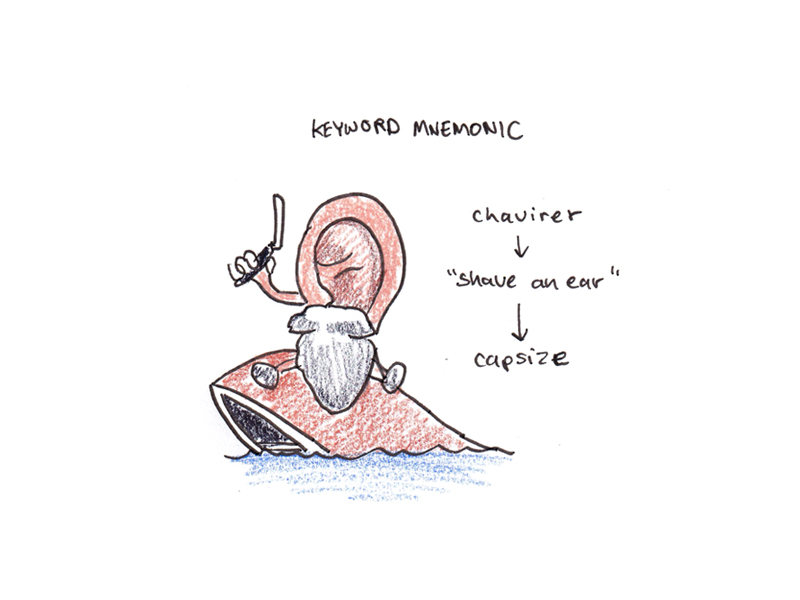
For those unfamiliar with the method, the basic idea is to take a foreign language word and create a phonetic clue by mapping it to a similar sounding word or phrase in English (or another language you know well) and then visually mapping that to a highly memorable picture.对于不熟悉这种方法的人来说,其基本思路是选取一个外语单词,将其映射到英语(或你熟悉的其他语言)中发音相似的单词或短语,从而生成一个语音线索,再将这个语音线索与一幅极易记忆的画面建立视觉关联。
For instance, if you’re trying to remember the French word chavirer -> to capsize, you can make a phonetic clue of “shave an ear,” then you have a mental picture of an oversized ear sitting in a canoe, shaving its beard while the canoe flips over. Visualize that mentally once or twice and the association sticks, whereas it may take dozens of repetitions for the direct association to take root.例如,如果你想记住法语单词 chavirer——意为“倾覆”,你可以造一个语音线索“shave an ear”(刮一只耳朵),然后在脑海中想象一只超大的耳朵坐在独木舟里,一边刮胡子,一边独木舟翻了过来。在脑海里想象一两次,这种关联就会牢固下来,而直接关联可能需要数十次重复才能扎根。
The keyword method works, but it hasn’t always performed well in lab experiments. The reason is that it often takes too much time and training to get right. Modern LLMs are well-suited to the kind of wordplay tasks required to generate these sorts of images.关键词法是有效的,但它在实验室实验中并非一直表现良好。原因在于要让它发挥出最佳效果往往需要耗费大量时间和进行训练。现代大语言模型非常适合生成这类图像所需的文字游戏类任务。
Spacing is another area where I expect AI to be some help, particularly the newer agentic AI paradigm. A major hiccup in applying spacing in learning is that it is a logistical nightmare to keep track of all the things you’ve learned and ensure some measure of regular re-exposure. Spaced repetition software does this for flashcards, but, as already discussed, those have fairly narrow applications.间隔重复是我期待人工智能能提供一些帮助的另一个领域,尤其是较新的智能体人工智能范式。在学习中应用间隔重复的一个主要障碍是,要追踪你所学的所有内容并确保对它们进行一定程度的定期复习,这在后勤上是件麻烦事。间隔重复软件可以为抽认卡实现这一功能,但正如之前所讨论的,这类软件的应用场景相当有限。
However, I can easily imagine a future where an AI agent helps you manage your workload by resurfacing questions and ideas from material you’ve recently studied. With some guidance, you may even solve some of the retrieval problems mentioned earlier by getting it to quiz you on the major ideas.不过,我可以轻松设想这样一个未来:AI 智能体帮你梳理近期学习资料中的问题和思路,从而管理你的学习任务。在适当的引导下,你甚至可以让它针对核心知识点对你进行提问测试,以此解决之前提到的一些检索相关问题。
Principle #8: Intuition 原则8:直觉
Understanding is central to learning. But the process of gaining understanding is still somewhat mysterious and poorly understood.理解是学习的核心。但获得理解的过程在某种程度上仍然是神秘且鲜为人知的。
While I’m generally in favor of a knowledge-in-pieces model of conceptual learning, where understandings are built bit by bit through many exposures, it’s also clear that a well-chosen analogy, metaphor or explanation can suddenly make the entire idea “click.”虽然我总体上支持概念学习的碎片化知识模型——即通过多次接触逐步构建理解——但同样明确的是,一个精心挑选的类比、隐喻或解释,能让整个概念突然“豁然开朗”。
In Ultralearning, I shared the Feynman Technique my somewhat-apocryphal method of self-explanations that I made heavy use of during the MIT Challenge. The basic method is simple:在_超级学习_中,我分享了费曼学习法——这是我在麻省理工学院挑战赛期间大量使用的、略带传奇色彩的自我解释方法。其基本方法很简单:
- Write down the concept or idea you want to explain.写下你想要解释的概念或想法。
- Write out an explanation as if you were teaching it to someone else.像教别人一样把解释写出来。
- Whenever you get stuck, go back to your study material and notes and re-read until you understand.每当你遇到困难时,回到你的学习资料和笔记中,重新阅读直到理解为止。
The technique works, but it is often frustrated by #3. If you don’t understand, even after reading the notes more deeply, you may waste a lot of time trying to find a better explanation.这个方法是可行的,但常常会被问题3所阻碍。如果你即便深入阅读注释后仍不理解,可能会浪费大量时间去寻找更清晰的解释。
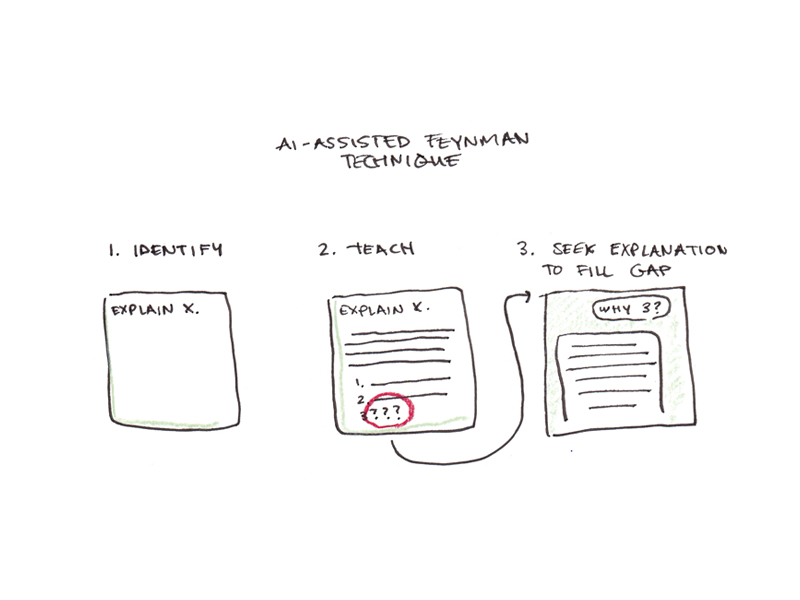
Similarly, the method can backfire when conceptual confusion is glossed over rather than dug into—you may maneuver around your own ignorance rather than confronting it. This is why the method benefits from specificity: if you’re having difficulty solving a problem, make the topic of your teaching that exact problem, not the concept it tests in general terms.同样,当概念性的混乱被掩盖而非深入探究时,这种方法可能会适得其反——你可能会回避自身的无知,而非直面它。这也是该方法需要具备针对性的原因:如果你难以解决某个问题,就将教学的主题定为这个具体的问题,而非它所考查的泛化概念。
AI has massive power to resolve both of these problems. For starters, while I find AI explanations are still somewhat inferior to good teachers, the gap is closing, and well-posed questions can generally get accurate answers. Using AI as a Socratic tutor is one of the ways it can help build understanding.人工智能拥有解决这两个问题的巨大能力。首先,虽然我认为人工智能的解释能力仍略逊于优秀的教师,但这一差距正在缩小,且提出恰当的问题通常都能得到准确的答案。将人工智能用作苏格拉底式导师,是它帮助人们构建认知理解的方式之一。
Second, AIs can ask pointed follow-up questions to reveal gaps in knowledge you don’t even know you are missing. I now frequently upload portions of essays I write where I explain some bit of science or history and ask the AI what I’m getting wrong. Often it nitpicks, but there are definitely occasions where I have a basic misconception.其次,人工智能可以提出针对性的追问,帮你发现自己压根没意识到的知识盲区。我现在经常会把自己写的文章中解释某段科学或历史内容的部分上传,然后问人工智能我哪里写错了。它常常会吹毛求疵,但确实也有不少时候,我存在一些基础性的认知误区。
The pitfall, of course, is that an on-demand system that can explain anything can also make it easy to skip steps #1 and #2 of the Feynman Technique. It’s very easy to ask AI to generate the explanation, skim through it and convince yourself you could have generated it on your own. 当然,这里存在一个陷阱:一个能解释任何内容的按需系统,也会让人轻易跳过费曼学习法的第一步和第二步。你可以很轻松地让人工智能生成解释,然后快速浏览一遍,就说服自己原本也能独立写出这样的内容。
The risk of using AI to learn is that not learning at all is always the lowest effort strategy, and most models are designed to allow you to do exactly that. Without guardrails, the default is to skip over the mental work needed to build intuition, even if the technology can, in theory, assist in constructing a deeper understanding.利用人工智能学习的风险在于,完全不学永远是最省力的策略,而大多数模型的设计初衷就是让你这么做。缺乏约束的情况下,人们往往会跳过培养直觉所需的思维过程,即便这项技术在理论上能够帮助人们建立更深层次的理解。
Principle #9: Experimentation 原则9:实验
Experimentation, the process of trying out different things and figuring out what works, both within the skill you’re trying to master and in the process of learning itself, is a recurring theme in Ultralearning.尝试,即尝试不同事物并找出有效方法的过程——无论是在你想要掌握的技能领域内,还是在学习这一行为本身的过程中——都是_超级学习_中反复出现的核心主题。
The new AI tools offer an acceleration of these possibilities. Not only because many new possible methods for learning now exist, such as on-demand Socratic tutoring, procedurally-generated practice problems, knowledge management, mnemonics generation and more, but also because many of the seemingly-useful applications are really pitfalls in disguise.新型人工智能工具为这些可能性带来了加速。这不仅是因为如今涌现出了许多新的学习潜在方法,比如按需苏格拉底式辅导、程序化生成的练习题、知识管理、助记符生成等等,还因为许多看似有用的应用实则暗藏陷阱。
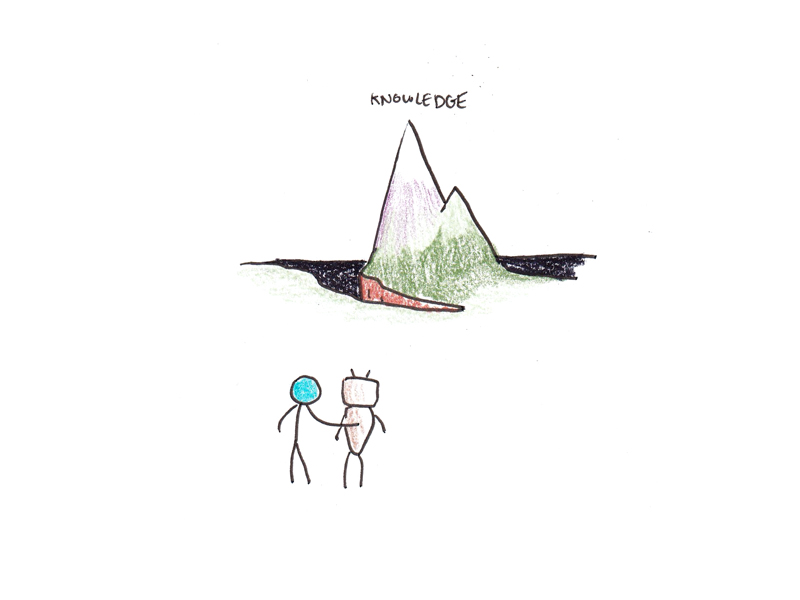
If I had to go back and redo any of the challenges I wrote about in Ultralearning, the possibilities for learning them would have changed dramatically. The MIT Challenge could have used AI to fill in material gaps, given me extra practice problems and gotten me unstuck when my self-explanations only led to confusion. The Year Without English could have had auto-generated flashcards, grammar explanations and corrective feedback on conversation recordings. I could have vibecoded software that could automatically give me detailed corrective feedback on the accuracy of my portrait drawings.
What wouldn’t have changed is the mental effort involved in learning skills, nor the joy and struggle in actually learning them. Despite the momentous technological changes we’re experiencing, I am still convinced that both the value and strain in learning new things will be an enduring constant.